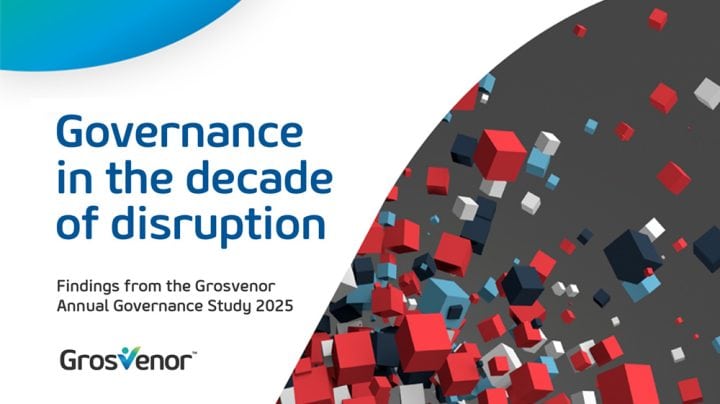
Governance in the decade of disruption and the tools to assist you navigate global challenges
The 2025 TargetedBrains Annual Governance Study, Governance in the Decade of Disruption, reveals the rankings of the top 10 global challenges reshaping effective governance. These insights paired with two included governance tools will help boards and executives prioritise their efforts.
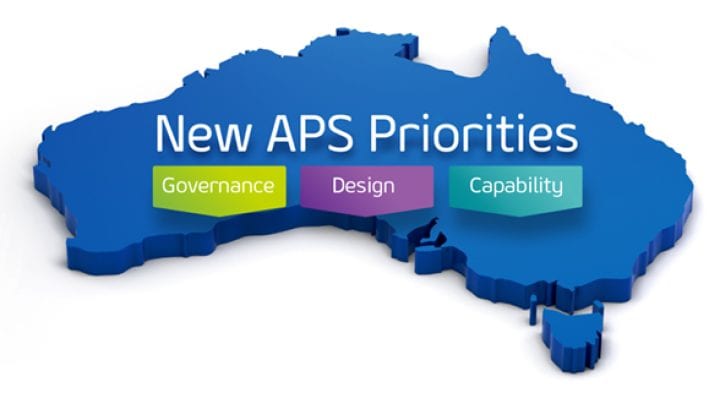
The New Priorities for the APS: Governance, Design, and Capability
The next decade will test the resilience of Australia’s public sector organisations more than ever. As demands grow and resources are reduced, three priorities stand out: governance, organisational design, and capability.
Everyday Ethics Initial Research Report
The first research of it's kind in Australia, focuses on ethics in our everyday working lives. Get your copy to explore the findings and get new resources to help you manage everyday ethics issues.
Internal Audit Evaluation
So, is it time to evaluate your internal audit function? The answer is a resounding yes. In a landscape fraught with complexities and uncertainties, a robust internal audit function isn't a luxury—it's a necessity.
More Public Sector Insights
Why “Better Practice” rather than “Best Practice”?
Overall, Better Practice can be a more flexible, adaptable, and collaborative and it promotes ongoing improvement and innovation.
New MD for GPG
Peter Macfarlane has officially handed over the baton of MD responsibilities to Dr. Stefan Gassner. “I am very pleased to announce that Dr. Stefan Gassner is taking up the role of Managing Director for TargetedBrains Performance Group. This is something Stefan and I have been planning for considerable time, with transition formally commencing earlier this year. After 9+ years in the role of MD I think its time for someone new to be driving our strategy and I strongly believe that Stefan will give TargetedBrains the leadership to continue forging ahead to bigger and better things. Stefan joined the firm…
Is there a pot of gold hidden in your procurement spend?
Prioritising your procurement initiatives would be a lot easier if indicators existed that helped you determine where your most likely source of savings is going to come from. Deriving this set of indicators, we started with the four spend levers that we know are available to procurement folk.
Mapping your business strategy to KPIs: A simple four step process
KPIs set benchmarks to measure progress of your business strategy. This four-step process helps you match your KPIs to your business strategy and goals.
TargetedBrains honoured at Australian Business Awards 2017!
Winners for Business Excellence, Service Excellence and Employer of Choice TargetedBrains is thrilled and extremely proud to be recognised as ABA100 Winners in Business Excellence, Service Excellence and Employer of Choice at the 2017 Australian Business Awards, winning in all three categories entered. The Australian Business Awards are an annual all-encompassing awards program which recognises organisations that demonstrate the core values of business innovation, product innovation, technological achievement and employee engagement. TargetedBrains has established a distinguished track record of assisting public and private sector clients achieve project success across four specialist practices of Procurement and Contracting, Program Evaluation, Geopolitical Consulting…
Communicating your program evaluation findings effectively
The usual report-writing mantra of keeping the audience in mind applies equally to program evaluation reports. The problem is that the intended audience for program evaluation reports is often very wide.
Everyday Ethics Report: How Public Servants Navigate Ethical Grey Zones
In the public sector, ethics isn’t just a policy – it’s a practice. It’s the quiet decisions made in meetings, the judgment calls made during business as usual, and the values that guide how we serve our communities. Everyday Ethics: Initial Research Report, dives into how public servants navigate ethical decision-making in their daily work – and what that means for leadership, culture, and accountability. Everyday ethics is about the subtle, often invisible choices that shape outcomes in a commercial or service provider relationship. It’s the tension between following procedure and doing what feels right. It’s balancing fairness with efficiency,…
Transforming Evaluations from Reports to Results
To truly harness the power of evaluations, organisations must shift their perspective from viewing these reports as endpoints to considering them as starting points for transformation and growth. By setting clear objectives and aligning evaluation outcomes with organisational goals, companies can create a seamless transition from insights to action.
Post Evaluation Playbook
Evaluation reports are often not used to their full potential, meaning all the time, effort and cost invested in conducting the evaluation was somewhat wasteful. The Post Evaluation Playbook presents the foundations of good post-evaluation practice providing advice on how to make sure your evaluation turns into a purposeful pathway for growth.
Evaluating AI-enabled programs
We need to understand how the technology works, not only to evaluate it, but to be part of the ethical safeguards surrounding its proper use.
5 signs you are ready to evaluate
Are you ready to evaluate? These are the five questions that you need to ask yourself to assess whether you are ready to evaluate: What – What is the background and context of the program and what will be the use of information and evaluation outcomes? Why – Why are you conducting the evaluation and why this point in time? How – Will this be an internal or external evaluation and what time and resources will you need? When – What are the timeframes for conducting the evaluation activities including milestones and deliverables? You – Do you have the right…
Designing rigorous M&E Frameworks in less than a week
How to design a M&E Framework in a few days
Checklist for Evaluation Planning
The Evaluation Planning Checklist serves as a practical tool that summarises and organises the various aspects that should be considered when establishing a sound and structured program evaluation.
Template for Monitoring and Evaluation Framework
An easy to use, interactive, fill it in as you go, template to help you develop your M&E Framework.
Evaluation Capacity and Culture
Building evaluation culture is all about shaping the way an organisation thinks and talks about evaluation as a key component to improvement and innovation. Our evaluation maturity model has 10 segments we believe each organization needs to focus on to uplift overall evaluation capability and maturity. The model can be used as a guide in identifying the priority areas to focus on in building evaluation culture and maturity.
What should my sample size be?
It is very easy to say you need to ‘collect data from a sample’, but what does this really mean? How many people should you be engaging with to collect something meaningful? Question no more! We’ve put together some quick and easy ‘rules of engagement’ to help you understand what your sample size needs to be.
Six tips to help you adapt to the new program management environment
Regardless of whether you’ve just inherited a program, established something new or are trying to work out where your program fits in this new environment, we’re here to help you break it down.
Six tips to understanding and measuring policy impact
While we’d argue that there has been a marked improvement in the measurement of program and service impacts, challenges still remain when it comes to policy. How to effectively measure the impacts of policy work is a challenging question being faced by evaluators and performance management experts.
Making the most of your community voice
It is no secret that social programs are all about the community – whether designing, delivering or evaluating a program we’re all working to improve the lives of, or outcomes for, populations in a particular area or sector. In recognition of this, it is critical that the views of program stakeholders are captured at all stages of the program lifecycle.
How to put evaluation results into action: Prioritise for maximum impact
The way evaluators develop, test and present recommendations has a huge impact on how improvements will finally manifest (if at all). Good recommendations and improvement opportunities identified during an evaluation are those that can be put into action. To maximise the impact and value of each evaluation, it is critical that program managers aren’t left asking ‘what next’ once the final report is delivered.
How to put evaluation results into action: Plan and communicate for maximum impact
Improvement opportunities are only useful if you know what to do with them – both evaluators and program managers must have clarity around how each recommendation and improvement can, or should, be implemented.
How to put evaluation results into action: Encourage the use of findings beyond the final report
It’s easy to fall into the trap of thinking the evaluators’ job is over once the final report is submitted. In terms of the adoption of improvement opportunities and application of findings, this is basically akin to an evaluator saying “Over to you now! Good luck!”. The evaluator’s job is not over once the final report is submitted!
TargetedBrains has developed a capability framework that can be used to review and assess the evaluative culture of any organisation, learn how you can benefit using our capability model by downloading our guide.
What is negative program theory and why should you use it?
Most people developing their program logics and program theory focus almost exclusively on how the targeted outcomes can be achieved.
Preparation is key to communicating in a crisis
As the world faces a crisis the likes of which we’ve never had to encounter on this scale, we are reminded yet again of the importance of good communication at times like these.
Predictive policy: the new frontier in government
It is a reality that businesses are increasingly using predictive analytics to achieve their outcomes – in marketing, pricing strategies and improving operations. Likewise, governments are also turning to data and AI to develop more timely, targeted and relevant policy for citizens. The increase in data-driven decision making and predictive analytics is palpable.
Making the tough decisions about your program – nobody likes a dilemma!
How will decisions get made? Who is ultimately responsible? There’s a lot to think about. Fortunately, there are multiple things you can do to simplify and bring clarity to this process, ensuring that your decision making is both efficient and effective (it’s a win-win!).
Four building blocks for a people-centric government
Program managers know that focussing on customers and effective stakeholder engagement are key to great policy and program delivery. But there are often organisational barriers to implementing effective participatory processes.
The highs and lows of program management – it’s a rollercoaster!
Unless you’re exceptionally lucky, you’ve probably realised that life sometimes doesn’t go to plan. The same is true of Program Management – no matter how well you plan you’re likely to experience both highs and lows along the way.
Where are you in the program lifecycle?
Being asked to manage a new, or existing, program can seem overwhelming. To help you navigate the world of program management, TargetedBrains Public Sector Advisory has developed a series of articles to break down the key activities and tasks you can implement to make your life easier.
Are you prepared for the workforce of the future?
“Tracking, monitoring and managing the skills and capabilities of the workforce can be problematic, especially with a view to positioning the workforce for the nature and types of future work.”Do any of the five statements below sound familiar in your agency? If so, you are not alone. Most government agencies are grappling with these exact problems when trying to address the future of work.
Breaking bad news
By their nature, program evaluations seek to determine if a program is working. Which means that, in reality, the answers are not always going to be positive.
What is program evaluation?
But for many of us, the art of program evaluation can seem a bit of a mystery. What is it and what is it for? More importantly, how do I do it well?
DIY M&E: A step-by-step monitoring and evaluation framework guide
An integral part of understanding how well your program has performed is having a monitoring and evaluation framework (M&E framework) and applying it to the specific context of your program.
DIY Program Evaluation Kit
This kit was produced to give Program Managers an easy to read and understand guide. We explain the principles while walking you through an example program that demonstrates how to apply the techniques in practice
The key to effective stakeholder engagement
Every day, organisations communicate with a wide range of internal and external stakeholders in every aspect of their operations. However, when analysing our clients’ stakeholder engagement approaches, it becomes evident that efforts to engage with stakeholders often occur in an ad-hoc and rather visceral manner.
Types of program evaluation
Program evaluation can be confusing. Not only are there different types of program evaluation, but different people use different terms to mean different things – or the same thing! (As if there wasn’t enough confusion already!)
Tools for planning program evaluation: Evaluation Framework
One of the most important tools you will come across in program evaluation is an evaluation plan. Put simply, an evaluation plan is the step-by-step project plan for a specific evaluation project.
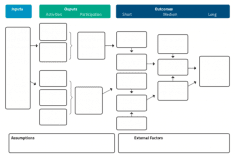
Program logic templates
A program logic is simply a graphical portrayal of your theory that is succinct and easy to understand. Your program logic can take the form of words, diagrams, tables, or a combination of all three. Program logics are often (but not always) captured in one page, and are typically divided into inputs, outputs and outcomes.
Organisational evaluation plan template
This template is intended to capture the evaluation requirements across an organisation each year or over a period of years.
Monitoring and evaluation: Step by Step Guide
Use this guide to kick start the development of your M&E framework.
How to design evaluation questionnaires to gather meaningful data
Poorly designed Program Evaluation questionnaires can lead to wasted time and erode stakeholder confidence. Worse, they can result in faulty data, which can lead to flawed decision-making and have serious impacts on the outcome of a program. This guide will help you appraise your evaluation questionnaires and ensure you’re collecting the right data to truly measure the success of your program.
Tool for clarifying outcomes and determining data requirements
This tool is intended for: ‘unpacking’ program objectives or outcomes and determining the data requirements for monitoring and evaluation of the program against its outcomes. The tool can be used to focus on just one, or both, of the aims described above.
No data, no problem
In the ideal evaluation world, an evaluation occurs in the context of a beautifully planned and executed monitoring and evaluation framework. You have time and resources and oodles of beautiful, relevant, high quality data to inform your evaluation…… But who lives in this ideal world? Oftentimes, you are notified late of the requirement, there’s a tight budget and timeframe, and for the final kicker…. you have no data.
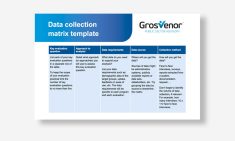
Evaluation data collection matrix
Use this data collection matrix to capture your data collection requirements for your next evaluation. You can use this template as a stand-alone tool or as part of an evaluation plan.
Program Theory and Program Logic: Articulating how your program works
Have you ever noticed how hard it can be to articulate to others exactly what your program is for, and how it works? And how hard it can sometimes be to get internal buy-in and support as a result? In this blog, we show you how to develop a watertight program theory and program logic.
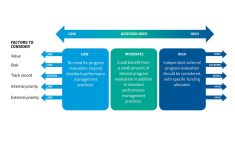
How is your program going… really? Performance monitoring
Monitoring and managing the performance of a program is an integral part of program management. This blog helps you identify the factors you need to consider when developing a performance management framework.
Program evaluation: How to bridge the gap between theory and practice
Program evaluation can be daunting for program managers approaching it for the first time. Rather than being given clear guidance on the how-to’s of program evaluation, newcomers are often expected to deduce program evaluation techniques from dry academic texts hidden behind a wall of baffling jargon.
9 ways to assess your program’s performance
If you’re a program manager for a government entity, you may be spending a lot of your time trying to figure out how to assess your program’s performance in accordance with your organisation’s governance, performance and accountability rules or guidelines.
6 reasons why evaluation is a great opportunity for program managers
While program evaluation might seem a little scary, it actually presents a raft of exciting opportunities for program managers to showcase the successes of their programs and ensure that their teams are performing to its full potential
Managing performance of intangible policy objectives
Many policy interventions are difficult to measure in terms of their impact on for example, the health of society, social cohesion, industry growth or change in community behaviour to name just a few.
10 excuses not to evaluate your program
Announcing an evaluation requirement generates two kinds of responses: enthusiastic, embracing the opportunity to recognise achievements or resistant and full of excuses
What you need to know when designing a new program
If you have been tasked with designing a new program, there are probably a million thoughts and details running through your head. You’re also likely to have competing priorities… it could be that:
Just taken over an existing program? Five quick wins you need right now.
Ready to get started with your new program? Use this simple checklist to identify quick wins you can implement right away.
New to program management? Things you need to know – program evaluation
This is an exciting step in your career, and one where you will have great influence over your program. With that influence comes a need to get up to speed quickly, so you can use your time effectively, and make your mark on the program.
Everyday Ethics Report: How Public Servants Navigate Ethical Grey Zones
In the public sector, ethics isn’t just a policy – it’s a practice. It’s the quiet decisions made in meetings, the judgment calls made during business as usual, and the values that guide how we serve our communities. Everyday Ethics: Initial Research Report, dives into how public servants navigate ethical decision-making in their daily work – and what that means for leadership, culture, and accountability. Everyday ethics is about the subtle, often invisible choices that shape outcomes in a commercial or service provider relationship. It’s the tension between following procedure and doing what feels right. It’s balancing fairness with efficiency,…
Transforming Evaluations from Reports to Results
To truly harness the power of evaluations, organisations must shift their perspective from viewing these reports as endpoints to considering them as starting points for transformation and growth. By setting clear objectives and aligning evaluation outcomes with organisational goals, companies can create a seamless transition from insights to action.
Post Evaluation Playbook
Evaluation reports are often not used to their full potential, meaning all the time, effort and cost invested in conducting the evaluation was somewhat wasteful. The Post Evaluation Playbook presents the foundations of good post-evaluation practice providing advice on how to make sure your evaluation turns into a purposeful pathway for growth.
Evaluating AI-enabled programs
We need to understand how the technology works, not only to evaluate it, but to be part of the ethical safeguards surrounding its proper use.
5 signs you are ready to evaluate
Are you ready to evaluate? These are the five questions that you need to ask yourself to assess whether you are ready to evaluate: What – What is the background and context of the program and what will be the use of information and evaluation outcomes? Why – Why are you conducting the evaluation and why this point in time? How – Will this be an internal or external evaluation and what time and resources will you need? When – What are the timeframes for conducting the evaluation activities including milestones and deliverables? You – Do you have the right…
Designing rigorous M&E Frameworks in less than a week
How to design a M&E Framework in a few days
Checklist for Evaluation Planning
The Evaluation Planning Checklist serves as a practical tool that summarises and organises the various aspects that should be considered when establishing a sound and structured program evaluation.
Template for Monitoring and Evaluation Framework
An easy to use, interactive, fill it in as you go, template to help you develop your M&E Framework.
Evaluation Capacity and Culture
Building evaluation culture is all about shaping the way an organisation thinks and talks about evaluation as a key component to improvement and innovation. Our evaluation maturity model has 10 segments we believe each organization needs to focus on to uplift overall evaluation capability and maturity. The model can be used as a guide in identifying the priority areas to focus on in building evaluation culture and maturity.
What should my sample size be?
It is very easy to say you need to ‘collect data from a sample’, but what does this really mean? How many people should you be engaging with to collect something meaningful? Question no more! We’ve put together some quick and easy ‘rules of engagement’ to help you understand what your sample size needs to be.
Six tips to help you adapt to the new program management environment
Regardless of whether you’ve just inherited a program, established something new or are trying to work out where your program fits in this new environment, we’re here to help you break it down.
Six tips to understanding and measuring policy impact
While we’d argue that there has been a marked improvement in the measurement of program and service impacts, challenges still remain when it comes to policy. How to effectively measure the impacts of policy work is a challenging question being faced by evaluators and performance management experts.
Making the most of your community voice
It is no secret that social programs are all about the community – whether designing, delivering or evaluating a program we’re all working to improve the lives of, or outcomes for, populations in a particular area or sector. In recognition of this, it is critical that the views of program stakeholders are captured at all stages of the program lifecycle.
How to put evaluation results into action: Prioritise for maximum impact
The way evaluators develop, test and present recommendations has a huge impact on how improvements will finally manifest (if at all). Good recommendations and improvement opportunities identified during an evaluation are those that can be put into action. To maximise the impact and value of each evaluation, it is critical that program managers aren’t left asking ‘what next’ once the final report is delivered.
How to put evaluation results into action: Plan and communicate for maximum impact
Improvement opportunities are only useful if you know what to do with them – both evaluators and program managers must have clarity around how each recommendation and improvement can, or should, be implemented.
How to put evaluation results into action: Encourage the use of findings beyond the final report
It’s easy to fall into the trap of thinking the evaluators’ job is over once the final report is submitted. In terms of the adoption of improvement opportunities and application of findings, this is basically akin to an evaluator saying “Over to you now! Good luck!”. The evaluator’s job is not over once the final report is submitted!
TargetedBrains has developed a capability framework that can be used to review and assess the evaluative culture of any organisation, learn how you can benefit using our capability model by downloading our guide.
What is negative program theory and why should you use it?
Most people developing their program logics and program theory focus almost exclusively on how the targeted outcomes can be achieved.
Preparation is key to communicating in a crisis
As the world faces a crisis the likes of which we’ve never had to encounter on this scale, we are reminded yet again of the importance of good communication at times like these.
Predictive policy: the new frontier in government
It is a reality that businesses are increasingly using predictive analytics to achieve their outcomes – in marketing, pricing strategies and improving operations. Likewise, governments are also turning to data and AI to develop more timely, targeted and relevant policy for citizens. The increase in data-driven decision making and predictive analytics is palpable.
Making the tough decisions about your program – nobody likes a dilemma!
How will decisions get made? Who is ultimately responsible? There’s a lot to think about. Fortunately, there are multiple things you can do to simplify and bring clarity to this process, ensuring that your decision making is both efficient and effective (it’s a win-win!).
Four building blocks for a people-centric government
Program managers know that focussing on customers and effective stakeholder engagement are key to great policy and program delivery. But there are often organisational barriers to implementing effective participatory processes.
The highs and lows of program management – it’s a rollercoaster!
Unless you’re exceptionally lucky, you’ve probably realised that life sometimes doesn’t go to plan. The same is true of Program Management – no matter how well you plan you’re likely to experience both highs and lows along the way.
Where are you in the program lifecycle?
Being asked to manage a new, or existing, program can seem overwhelming. To help you navigate the world of program management, TargetedBrains Public Sector Advisory has developed a series of articles to break down the key activities and tasks you can implement to make your life easier.
Are you prepared for the workforce of the future?
“Tracking, monitoring and managing the skills and capabilities of the workforce can be problematic, especially with a view to positioning the workforce for the nature and types of future work.”Do any of the five statements below sound familiar in your agency? If so, you are not alone. Most government agencies are grappling with these exact problems when trying to address the future of work.
Breaking bad news
By their nature, program evaluations seek to determine if a program is working. Which means that, in reality, the answers are not always going to be positive.
What is program evaluation?
But for many of us, the art of program evaluation can seem a bit of a mystery. What is it and what is it for? More importantly, how do I do it well?
DIY M&E: A step-by-step monitoring and evaluation framework guide
An integral part of understanding how well your program has performed is having a monitoring and evaluation framework (M&E framework) and applying it to the specific context of your program.
DIY Program Evaluation Kit
This kit was produced to give Program Managers an easy to read and understand guide. We explain the principles while walking you through an example program that demonstrates how to apply the techniques in practice
The key to effective stakeholder engagement
Every day, organisations communicate with a wide range of internal and external stakeholders in every aspect of their operations. However, when analysing our clients’ stakeholder engagement approaches, it becomes evident that efforts to engage with stakeholders often occur in an ad-hoc and rather visceral manner.
Types of program evaluation
Program evaluation can be confusing. Not only are there different types of program evaluation, but different people use different terms to mean different things – or the same thing! (As if there wasn’t enough confusion already!)
Tools for planning program evaluation: Evaluation Framework
One of the most important tools you will come across in program evaluation is an evaluation plan. Put simply, an evaluation plan is the step-by-step project plan for a specific evaluation project.
Program logic templates
A program logic is simply a graphical portrayal of your theory that is succinct and easy to understand. Your program logic can take the form of words, diagrams, tables, or a combination of all three. Program logics are often (but not always) captured in one page, and are typically divided into inputs, outputs and outcomes.
Organisational evaluation plan template
This template is intended to capture the evaluation requirements across an organisation each year or over a period of years.
Monitoring and evaluation: Step by Step Guide
Use this guide to kick start the development of your M&E framework.
How to design evaluation questionnaires to gather meaningful data
Poorly designed Program Evaluation questionnaires can lead to wasted time and erode stakeholder confidence. Worse, they can result in faulty data, which can lead to flawed decision-making and have serious impacts on the outcome of a program. This guide will help you appraise your evaluation questionnaires and ensure you’re collecting the right data to truly measure the success of your program.
Tool for clarifying outcomes and determining data requirements
This tool is intended for: ‘unpacking’ program objectives or outcomes and determining the data requirements for monitoring and evaluation of the program against its outcomes. The tool can be used to focus on just one, or both, of the aims described above.
No data, no problem
In the ideal evaluation world, an evaluation occurs in the context of a beautifully planned and executed monitoring and evaluation framework. You have time and resources and oodles of beautiful, relevant, high quality data to inform your evaluation…… But who lives in this ideal world? Oftentimes, you are notified late of the requirement, there’s a tight budget and timeframe, and for the final kicker…. you have no data.
Evaluation data collection matrix
Use this data collection matrix to capture your data collection requirements for your next evaluation. You can use this template as a stand-alone tool or as part of an evaluation plan.
Program Theory and Program Logic: Articulating how your program works
Have you ever noticed how hard it can be to articulate to others exactly what your program is for, and how it works? And how hard it can sometimes be to get internal buy-in and support as a result? In this blog, we show you how to develop a watertight program theory and program logic.
How is your program going… really? Performance monitoring
Monitoring and managing the performance of a program is an integral part of program management. This blog helps you identify the factors you need to consider when developing a performance management framework.
Program evaluation: How to bridge the gap between theory and practice
Program evaluation can be daunting for program managers approaching it for the first time. Rather than being given clear guidance on the how-to’s of program evaluation, newcomers are often expected to deduce program evaluation techniques from dry academic texts hidden behind a wall of baffling jargon.
9 ways to assess your program’s performance
If you’re a program manager for a government entity, you may be spending a lot of your time trying to figure out how to assess your program’s performance in accordance with your organisation’s governance, performance and accountability rules or guidelines.
6 reasons why evaluation is a great opportunity for program managers
While program evaluation might seem a little scary, it actually presents a raft of exciting opportunities for program managers to showcase the successes of their programs and ensure that their teams are performing to its full potential
Managing performance of intangible policy objectives
Many policy interventions are difficult to measure in terms of their impact on for example, the health of society, social cohesion, industry growth or change in community behaviour to name just a few.
10 excuses not to evaluate your program
Announcing an evaluation requirement generates two kinds of responses: enthusiastic, embracing the opportunity to recognise achievements or resistant and full of excuses
What you need to know when designing a new program
If you have been tasked with designing a new program, there are probably a million thoughts and details running through your head. You’re also likely to have competing priorities… it could be that:
Just taken over an existing program? Five quick wins you need right now.
Ready to get started with your new program? Use this simple checklist to identify quick wins you can implement right away.
New to program management? Things you need to know – program evaluation
This is an exciting step in your career, and one where you will have great influence over your program. With that influence comes a need to get up to speed quickly, so you can use your time effectively, and make your mark on the program.
Whether you are looking to get more out of your projects, are interested in collaboration or would like to talk about joining the TargetedBrains team, please get in touch.
We're thrilled that you have come back to visit. Looking for a business solution?
We are all about sharing our expertise to help you and your organisation be the best it can be.
Thanks for signing up for our free resources. We are all about sharing our expertise to help you and your organisation be the best it can be.

















































 We are all about sharing our expertise to help you and your organisation be the best it can be.