






How to achieve high supplier performance

Interventions to boost supplier performance

We asked participants in our 2023 procurement research titled Geared to High Performance, how they would rate the average performance of their suppliers within a specific category (refer Figure 1). We asked for a general score between 0 (no performance) to 10 (high performance).
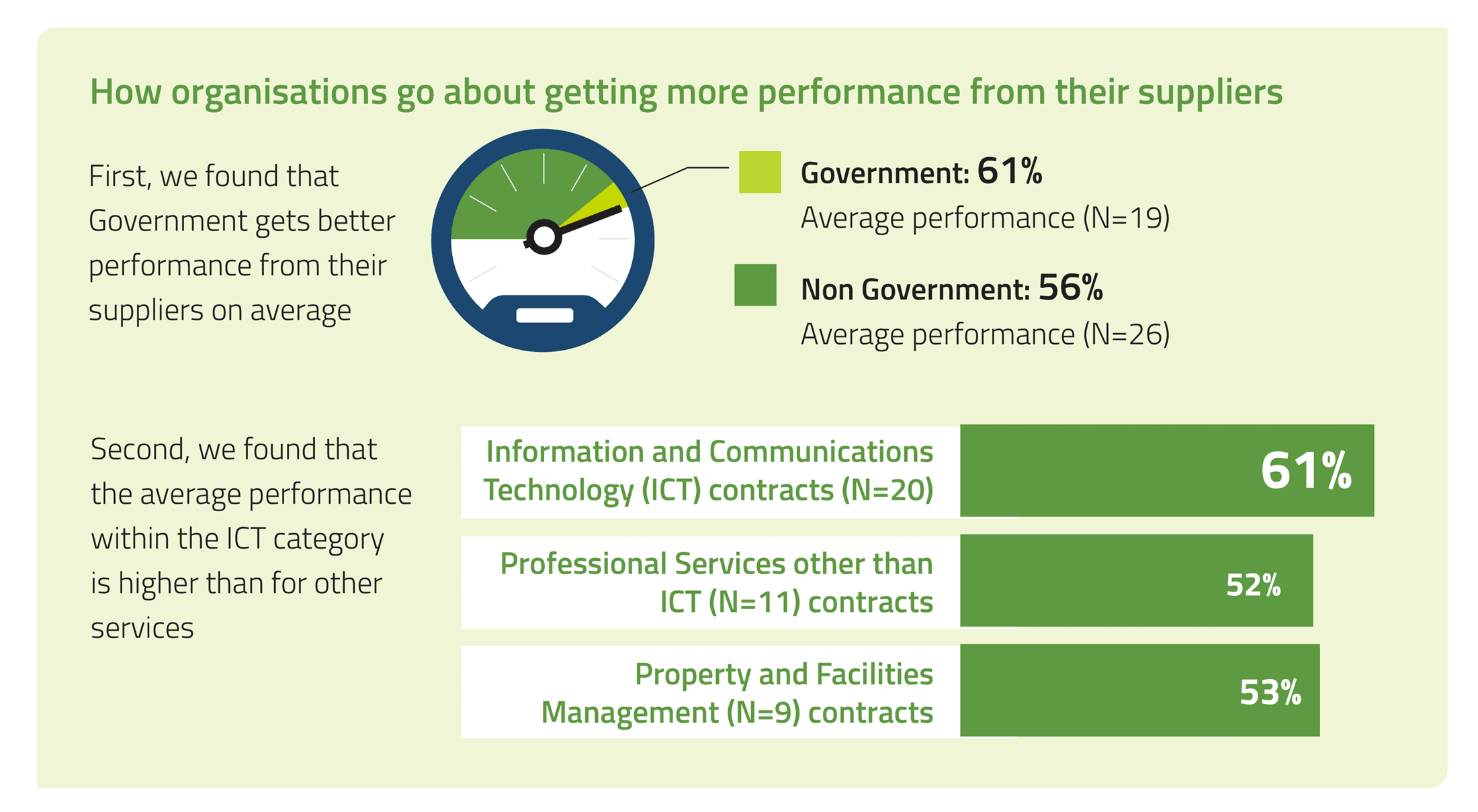
Figure 1: Average performance of contracts


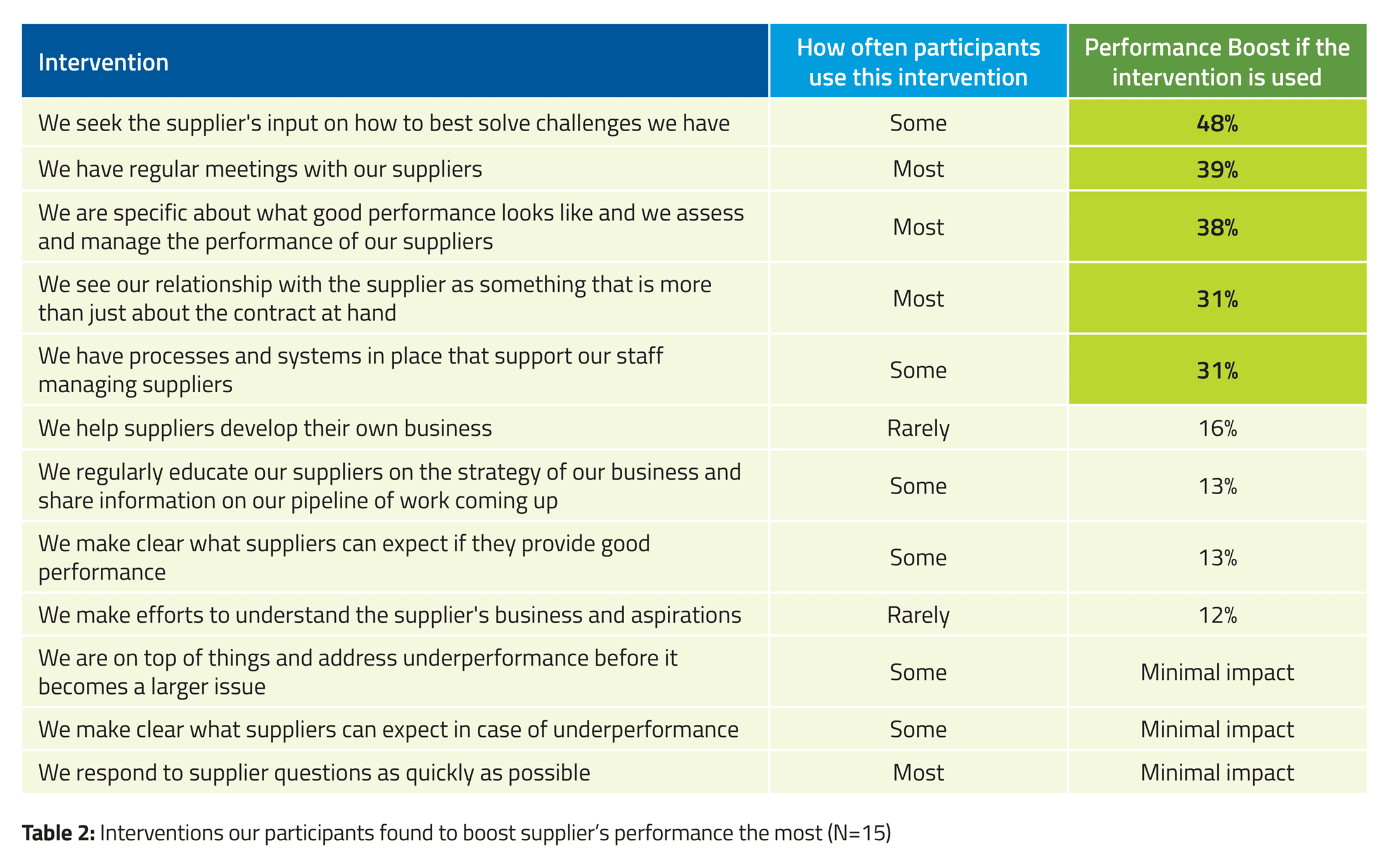
The research participants in general found that the more avenues to influence the performance of their service providers they use, the better the performance. Those participants who achieved good performance used on average eight interventions, those who received acceptable or underperformance used only five interventions.

We found that the following five interventions made the biggest difference on supplier performance:

  • We make efforts to understand the supplier’s business and aspirations
  • We have processes and systems in place that support our staff managing suppliers
  • We regularly educate our suppliers on the strategy of our business and share information on our pipeline of work coming up > We help suppliers develop their own business
  • We are specific about what good performance looks like and we assess and manage the performance of our suppliers.

Table 2 has a complete list of interventions used by participants. The Performance Boost column indicates what additional performance clients receive who use this intervention versus those clients who do not use the intervention
If you are interested in additional practical tips for how to set up your contract management for success, book a chat with Stefan Gassner

What is supplier performance management?

Supplier performance management involves monitoring and evaluating suppliers to ensure they meet agreed-upon standards and deliver value. Effective management can lead to improved quality, cost savings, and stronger supplier relationships.

Establishing clear Key Performance Indicators (KPIs) aligned with your business objectives is crucial. Regularly review these KPIs and provide constructive feedback to suppliers to foster continuous improvement.

Our research identified five key interventions:

  • Understanding the supplier’s business and aspirations
  • Implementing supportive processes and systems
  • Educating suppliers about your business strategy and upcoming projects
  • Assisting suppliers in their development
  • Clearly defining and assessing performance expectations

    Organisations employing these interventions reported higher supplier performance.

Gaining insight into your supplier’s operations and goals can lead to better collaboration, anticipate potential issues, and align objectives, resulting in improved performance and mutual growth.

Well-defined KPIs set clear expectations and provide measurable targets, guiding suppliers towards desired outcomes. Regular assessment against these KPIs helps identify areas for improvement and reinforces accountability.

Educating suppliers about your strategic goals and upcoming projects fosters alignment and proactive engagement, leading to better planning and execution on their part.

Providing feedback, sharing best practices, and offering training opportunities can help suppliers enhance their capabilities, leading to improved performance and a stronger partnership.

Implementing robust procurement and contract management systems ensures efficient monitoring, documentation, and communication, facilitating better supplier performance management.

Regular assessments, at least quarterly, allow for timely identification of issues, enabling corrective actions and continuous improvement in supplier performance.

Achieving high supplier performance can lead to cost savings, improved quality, timely delivery, and stronger supplier relationships, contributing to overall business success.

Get in Touch
X

Whether you are looking to get more out of your projects, are interested in collaboration or would like to talk about joining the TargetedBrains team, please get in touch.