




How do you drive employee engagement? By crafting challenges

Tips on getting the right balance between challenge and motivation
By Charitee Davies
I understand that challenges, when crafted correctly can create huge levels of motivation and engagement. Consulting is hard. There is sometimes a misconception that consultants have it easy. In my experience, really good consultants do an often difficult job. My work consulting to the public sector in Australia and internationally has rarely been easy. At times it has asked a lot of me, and of my family. Long hours, cognitive strain, competing pressures that sometimes lead to stress…you know the deal. So why would anyone sign up for a job in consulting? For me, there are a bunch of reasons: the satisfaction of working on complex problems that will make a genuine difference to Australians is chief among them. But there is also the autonomy, flexibility and development that attracts me. Not all consulting jobs are created equally. And not all consulting firms appreciate the nuance required to curate the right type of development environment for their people such that they want to stay beyond a year or two.
I have thought a lot about this in my own personal and professional journey across the last few years. I’ve asked myself ‘what do I wish my leaders had done in relation to my development earlier in my career?’ And I realised I was asking the wrong question… in fact, I should have been asking ‘what do I wish my leaders had allowed me to do in relation to my own development earlier in my career?’ I realised I never really felt like I was in the driver’s seat of my own career. It’s not that good things hadn’t happened. They had. I was afforded great opportunities, was awarded promotions, selected for taskforces, and so on. But these felt like fortuitous happenings rather than something I had specifically set out to achieve. I had been in the right place at the right time with roughly the right skill set. I wonder what I would have done differently if I had understood I was in control of my career; I was in charge of what I focussed on to improve and develop?
The benefit of hindsight is a lovely thing. Looking back on my early career I saw that I had always been very motivated by a challenge. Same goes for how I approach work today. But it must be a challenge I feel passionate about. I am not going to put myself through difficult times for causes I don’t feel passionate about. But let me loose on a cause I feel passionate about and I can become quite relentless.
So, naturally, as I was wondering ‘what can I do as a leader in our business to encourage self-determination, an active development mindset across the business, and an approach that allows everyone to be genuinely deliberately developmental?’, the answer became clear…we need to ensure staff can challenge themselves in ways that motivate them as well as drive our business strategy. This is deeper than just about making sure they have the right tools and resources to meet the everyday challenges of work, to providing stretch opportunities to utilise their skills, ensuring they feel highly motivated to develop.
In a nutshell, one of the reasons we won the AFR BOSS Best Places to Work in the Professional Services Category is because we have struck the right balance between challenge and motivation. It comes down to the following:
1. We promote people’s passion projects. Whether it be developing a new work-related skill, becoming a visible expert in their field, taking a secondment, or investing time in a personal pursuit outside of work, our employees see that their development as individuals is valued and rewarded. This makes them more motivated and engaged.
2. Our Visible Expert Development Pathway encourages all our people to foster a sense of mastery. We provide employees the time, space, and necessary resources to pursue work-related opportunities and challenges that contribute to their development, and recognition of their skills.
3. We ensure our people have regular and ongoing opportunities to align their work with their strengths, aptitudes, preferences, and passions. They can choose their own adventure and we will travel along with them.
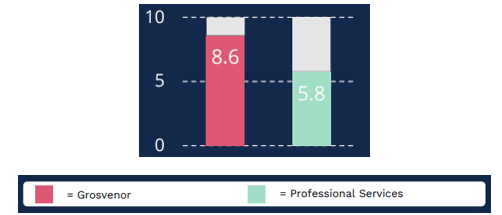
The benchmarking report shows that we were assessed as being 28% more advanced in our approach to using challenges as a motivator than the other applicants in the AFR BOSS Best Places to Work Awards.
To learn more about how to cultivate a work environment that is challenging and supportive of growth, reach out to contactus@targetedbrains.com
Charitee is always happy to share lessons and insights.
 We are all about sharing our expertise to help you and your organisation be the best it can be.